Learning how to teach the place command gives dog owners a practical way to guide energy into calm behavior. Instead of chasing your dog away from the door, table, or guests, you teach your dog to go to a designated spot, settle, and wait for a release.
Key Takeaways
- The place command means your dog goes to a mat, cot, or dog bed and stays there until a release word.
- This skill builds self-control, impulse control, and better manners around guests, meals, and doors.
- You will start training with simple luring, rewards, and a clear release cue, then add duration, distance, and distractions.
- Consistent training matters, especially if your dog gets excited during busy times.
- Professional help may be useful if anxiety, reactivity, aggression, or feeling overwhelmed makes training difficult.
What Is the Place Command?
The place command teaches a dog to go to a specific object, such as a raised cot, rectangular mat, rug, or bed, and remain there until released. The dog can sit, lie, or stand, as long as all four paws stay on the place spot and the dog can remain calm.
This is different from a formal stay. A stay asks the dog to maintain a specific position, such as sit or down, until released, and it may last for a short or extended period. Place asks the dog to remain within a defined boundary, such as a mat, cot, or bed, where the dog can settle in an allowed position. Wait usually means pausing briefly before proceeding.
The place command teaches dogs self-control and impulse management, which is an important part of dog obedience. It also helps dogs remain calm during distractions, because the dog learns that relaxing on cue is the expected behavior even when life is happening around them.
For example, your dog might settle on a mat while kids do homework, lie on a cot during dinner, or rest on a bed when the doorbell rings. Place can also give anxious or easily overwhelmed dogs a predictable spot to relax, especially when it is introduced calmly and never used as punishment.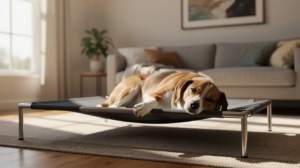
How to Teach the Place Command Step by Step
If you are wondering how to teach the place command, begin with short, simple training sessions. Some dogs begin understanding the basic pattern quickly, while others need additional repetition and guidance. Reliable performance takes patience, consistent practice, and gradual work around duration, distance, and distractions.
- Choose the right item. Use a distinct object like a bed or rug for the place command. A non-slip mat, raised cot, or sturdy dog bed works well if it is large enough for your dog to turn around and stretch out. A low-traffic corner of the house is a great spot to begin.
- Make it appealing. Toss a treat onto the mat and let your dog explore. Use high-value treats to reward your dog on their place. You can also introduce special items like toys to make the place appealing, especially if your dog loves a certain chew or soft toy.
- Use gentle leash guidance if needed.
- A lightweight leash can provide gentle, controlled guidance for a hesitant or distracted dog. Use minimal pressure, release it as soon as the dog moves toward the place spot, and never pull or drag the dog onto the mat. The goal is to support the dog’s understanding, not force the behavior.
- Lure and mark. Guide your dog fully onto the mat with a treat. As soon as all four paws are on the surface, use a clicker or marker word such as “yes,” then deliver the reward on the mat. Once your dog is predictably moving onto the mat, begin saying “place” immediately before guiding them toward it.
- Repeat until clear. Practice leading the dog to the place from various angles and directions. Repeat step after step until your dog quickly steps fully onto the mat when hearing the cue.
- Add a calm position. It helps if your dog already knows down, but you can also ask for sit if that is easier at first. The point is not a rigid position, but calm settling on the mat, cot, or bed.
- Teach the release. Teach a consistent release command to indicate when dogs can leave the place. Use a release word like “free” for the place command, or choose ‘break.’ Say the release word invite the dog off, and reward calmly so the dog understands that leaving also happens on cue.
Keep training sessions short to prevent dog boredom. Aim for 3 to 5 minutes, 1 to 3 times per day, and end on success so the exercise stays fun. The place command can support better responsiveness because the dog practices listening, moving with you, settling, and releasing on cue.
How to Build Duration, Distance, and Distractions
Once your dog understands how to go to their place, the next goal is staying there calmly with increasing duration, distance from you, and mild distractions. Add only one challenge at a time so your dog does not have a much harder time succeeding.
- Add duration. Begin with a few seconds, usually 5 to 10 seconds of calm behavior on the mat. Gradually increase how long your dog stays on their place, rewarding periodically while the dog remains settled. Build slowly until your dog can relax for several minutes, then continue adding time as your dog becomes more reliable.
- Add distance. When your dog can remain for 30 to 60 seconds, take one or two steps away, return, and reward on the mat. Adding distance helps your dog learn to stay on place even when you move away. Over time, gradually increase how far you walk across the room and how long you wait before returning.
- Add distractions. Incorporate distractions once dogs master the place command basics. Start with walking past with a treat pouch, opening the fridge, sitting in a chair, or moving around the floor. Later, add distractions such as TV noise, kids walking by, knocking, or practice when the doorbell rings.
- Reset calmly. If your dog breaks, guide them back without scolding, reset the exercise, and make the next repetition easier. The goal is control, not conflict.
Practice Place in different rooms to help generalize the command. Later, use safe outdoor areas and various settings, such as a patio or quiet yard. This helps the dog understand that the place command and release word apply everywhere, not just in one room.
How the Place Command Helps in Everyday Life
Once reliable, the place command can become part of your daily routines. It helps lower stress for both dog and owner because the dog has a clear job during busy times.
- Guests: Send your dog to their place when the doorbell rings, reward quiet behavior, and release only after visitors are inside and settled. Using place can help reduce unwanted behaviors like jumping, crowding guests, and begging when it is practiced consistently.
- Mealtime: Ask your dog to go to their place during breakfast or dinner so they are not begging under the table or bumping into kids with food.
- Door manners: Use place when accepting deliveries or opening the front door. This can help reduce bolting, jumping, and chaotic behavior in the entryway.
- Daily routines: Practice during TV time, work calls, homework hours, or after dog walks when your dog is alert but ready to settle.
- Multiple dogs: Place can help manage multiple dogs in busy households, especially when each dog has a separate mat, cot, or bed.
Teaching the place command can help manage excitability in dogs by giving them a clear job during busy moments. Over time, this structure may reduce jumping, pacing, and attention-seeking because the dog learns that relaxing quietly is what earns the reward.
Common Mistakes When Teaching Place
Many owners struggle not because the dog cannot learn, but because a few training habits are unclear. These mistakes are easy to fix with consistent training.
- No clear release word: Without a release cue, the dog may decide when to leave, which weakens impulse control.
- Releasing too soon: If you always release after just a few seconds, your dog never practices real duration.
- Only practicing when tired: If you only practice after exercise, you may miss how the dog’s behavior changes when your dog is alert, excited, or distracted.
- Inconsistent rules: Sometimes allowing your dog to wander off the mat makes the command unreliable.
- Using the place as punishment: Harsh corrections or sending your dog there while angry can make the place feel unsafe.
- Skipping basics: If your dog does not understand other commands, especially down and release, place may be harder to teach.
Use positive reinforcement to encourage your dog to enjoy Place. When the dog makes a mistake, calmly reset, lower the difficulty, and reward the next success.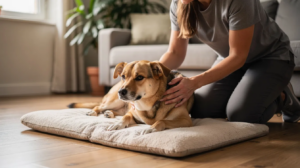
When to Consider Professional Help
Some anxious, reactive, highly excitable, or physically strong dogs may benefit from professional guidance. If your dog growls, snaps, panics, or shows aggression when being guided toward the mat, stop the exercise and do not force the dog onto the place spot. Contact a qualified trainer or behavior professional for a safer training plan. Sudden or unexplained behavior changes should also be discussed with your veterinarian to rule out pain or another medical cause.
Help may also be needed if your dog cannot relax after several weeks of consistent training, breaks the place command constantly, or vocalizes non-stop. A skilled trainer can customize the exercise, adjust equipment, and help you compare training options that include impulse control, leash work, walking manners, and structured routines at home.
Private training or professional guidance can also help if you are unsure how to time your cue, marker word, reward, and release. If you need help building reliable commands and a calmer, easier-to-manage dog at home, reach out to a qualified local trainer for support.
Final Thoughts
Learning how to teach the place command gives you a practical tool for directing your dog’s energy into calm, structured behavior. It is more than a trick, because the place command builds self-control, reduces chaos, and creates a predictable routine.
Success comes from short sessions, clear cues, and rewarding calm behavior on the mat, bed, or cot. Be patient, practice daily, and seek professional guidance if you want extra support with dog obedience, calm behavior, and reliable commands at home.
FAQ
How long does it usually take to teach the place command?
The timeline varies by dog. Some dogs understand how to move onto the mat after several short sessions, while reliable duration, distance, and distraction work may require several weeks of consistent practice. Age, temperament, previous training, and owner follow-through all affect progress.
What type of bed or mat works best for the place command?
A rectangular, non-slip surface works best because it gives your dog clear boundaries. A raised cot, rubber-backed mat, or sturdy dog bed is helpful, especially if you want to practice in different rooms.
Can I use the place command for more than one dog at a time?
Yes, but teach each dog individually first, so every dog understands their own designated area and release word. Then add one dog at a time to group practice, using separate beds or mats and watching for tension or resource guarding.
What should I do if my dog keeps leaving their place before I release them?
Calmly guide your dog back to the mat, reset the exercise, and lower the difficulty. Shorten the duration, reduce distractions, and reward more often while your dog remains on the mat.
Is the place command suitable for puppies?
Yes, puppies can begin a simple version once they are settled at home, often around 8 to 12 weeks old. Keep sessions very short, make the bed or mat positive, and build the foundation for stronger impulse control as your puppy matures.