
Introduction
Trigger stacking refers to the accumulation of multiple stressors in rapid succession that collectively push a dog beyond its ability to cope, often resulting in reactive, aggressive, or shutdown behaviors that seem to come out of nowhere. A dog’s stress capacity can be conceptualized as a bucket that fills with each stressful event-each stressor adds to a dog’s overall stress level, and once that bucket overflows, even a minor final stimulus can produce an explosive behavioral response. Understanding this concept is one of the most important steps any dog owner can take toward building a calmer, more resilient pet.
This article covers the fundamentals of trigger stacking in dogs, including identification of common triggers, the physiology behind stress accumulation, prevention strategies, and recovery protocols. It is written for dog owners in Toledo and beyond who are dealing with reactive, anxious, or aggressive behaviors and want expert advice grounded in behavioral science. Whether your dog lunges at other dogs on walks, panics during thunderstorms, or has become increasingly difficult to manage in busy environments, this guide will help you understand why-and what to do about it.
Trigger stacking occurs when multiple stress triggers happen in short succession, overwhelming a dog’s ability to cope and often resulting in reactions that appear disproportionate to the final trigger. The final trigger in a stack does not usually cause the reaction but is simply the last event that pushes the dog over threshold.
By reading this article, you will gain:
- A clear understanding of what trigger stacking is and how it develops physiologically
- The ability to recognize early warning signs before your dog reaches overload
- Practical prevention strategies for managing your dog’s environment
- Recovery protocols that support your dog’s return to baseline stress levels
- Guidance on when professional behavior modification is necessary
Understanding Trigger Stacking Fundamentals
Trigger stacking is a foundational concept in modern dog training and behavior modification. Without accounting for cumulative stress, even well-designed training plans can fail-because a dog that has already been exposed to too many triggers before a session simply cannot learn. Understanding how stacking in dogs works allows owners and trainers to set dogs up for success rather than inadvertently reinforcing reactive patterns.
What Constitutes a Trigger
A trigger is any stimulus-environmental, social, or physical-that elicits stress, fear, frustration, or heightened arousal in a dog. Common triggers include loud noises (sirens, construction, fireworks), unfamiliar people approaching, encounters with other dogs, veterinary visits, car rides, and even physical discomfort like hunger or pain. For dogs living in urban or semi-urban areas like Toledo, daily potential triggers can include traffic noise, delivery vehicles, construction zones, and dense pedestrian traffic.
Not all triggers are negative in isolation. Positive stressors can contribute to trigger stacking by increasing adrenaline levels-an exciting play session at a dog park, for example, raises arousal just as a frightening noise does. What matters is the cumulative load. Each trigger activates the dog’s stress physiology, specifically the hypothalamic–pituitary–adrenal (HPA) axis, leading to the release of stress hormones like cortisol and adrenaline. When multiple triggers occur without adequate recovery, these hormones build up and the dog’s arousal climbs toward-and eventually past-its coping threshold.
The Stress Threshold Concept
Every individual dog has a unique stress threshold: the point at which accumulated stress overwhelms coping resources and the dog can no longer remain calm or responsive. Below threshold, dogs can follow cues, accept treats, and engage with their environment. Above threshold, they may react with barking, lunging, freezing, or aggression.
Cortisol and adrenaline play central roles in this process. Adrenaline triggers the immediate “fight-or-flight” response-heightened alertness, increased heart rate, and muscle tension. Cortisol mobilizes energy and sustains alertness over a longer period. Research shows that plasma cortisol rises within approximately 15 to 30 minutes of acute stress onset. Critically, stress hormones like cortisol can remain elevated in a dog’s bloodstream for 24 to 72 hours, meaning a stressful event on Monday morning can still lower threshold on Tuesday afternoon.
Increased sensitivity to triggers can develop after a series of accumulated stressors, effectively creating a cycle where each stacking episode makes the next one more likely. This is why understanding threshold-and respecting it-is the foundation of preventing trigger stacking.

How Trigger Stacking Develops in Dogs
With the threshold concept established, the next step is understanding exactly how multiple stressors accumulate to push a dog past its breaking point. Trigger stacking occurs when multiple stressors accumulate quickly, without giving the dog time to process and recover from each one individually.
Common Trigger Combinations
Consider a common scenario: a dog experiences a stressful car ride to the veterinarian, encounters unfamiliar people in the waiting room, hears a barking dog in the next exam room, and then undergoes restraint during the examination. Each stressor adds to the dog’s overall stress level. By the time the pet returns home, even the sound of a doorbell can provoke lunging or snapping-a reaction that seems wildly disproportionate if you only consider that single trigger.
Seasonal stacking is particularly relevant in Toledo. During summer months, fireworks, thunderstorms, construction noise, and neighborhood gatherings can overlap. A dog that tolerates any one of these may react explosively when two or three converge on the same day. Daily domestic stacking is equally common: the doorbell rings, a delivery person appears, children run through the house, and a neighbor’s dog starts barking-all within a short period.
Even anticipatory stress contributes. A dog that has learned to associate the car with veterinary visits may begin showing stress signals before leaving the house, meaning the stacking process starts before any external trigger is encountered.
Timeframes and Recovery Windows
Recovery time is essential after a dog experiences trigger stacking. How long stress hormones remain elevated varies significantly by individual dog, but the science is clear: dogs may require hours or days to recover from trigger stacking. Cortisol peaks within 15 to 30 minutes of a stressful event, but elimination and return to baseline is much slower. Chronic or repeated stacking without adequate recovery can leave baseline cortisol permanently elevated, resulting in a dog with a chronically lower threshold.
Individual variation in recovery depends on breed, age, temperament, health status, and early life experiences. Dogs with lower thresholds-whether due to genetics, insufficient socialization, or prior trauma-need longer rest periods between exposures to potential triggers. Failing to provide this recovery is one of the most common mistakes dog owners make, and it creates a vicious cycle where incomplete recovery leads to progressively worse reactions.
Signs Your Dog Is Approaching Overload
Understanding early warning signs can help prevent dogs from reaching their emotional breaking point. Dogs display warning signs like lip licking and yawning before reaching a breaking point, but many owners miss these subtle cues.
Early warning signs include increased panting, scanning (rapid head and eye movement), restlessness, dilated pupils, ears pinned back, and a low or stiff tail. Signs of trigger stacking include stiff body posture, and dogs may display hypervigilance when experiencing trigger stacking. Reading your dog’s body language at this stage is critical-these signals indicate that the stress bucket is filling.
As stress level increases, behaviors escalate: whining, pacing, difficulty settling, inability to follow known commands, and refusal of treats. Increased panting can indicate trigger stacking in dogs, as can an inability to shift focus away from perceived threats. The AAHA behavioral guidelines list dozens of anxiety indicators across mild, moderate, and severe categories.
A practical tool for assessing where your dog falls on the stress spectrum is UC Davis’ canine threshold thermometer, which categorizes stress levels based on observable behaviors and responsiveness. If your dog can still take treats and follow basic cues, they are likely below threshold. If they cannot, they have crossed it-and continued exposure will only make things worse.
Prevention and Management Strategies
The most effective approach to trigger stacking is proactive prevention rather than reactive damage control. Managing trigger stacking requires proactive strategies to reduce overall stress before a dog ever reaches the point of behavioral response. Environmental management is vital for reducing triggers that contribute to stress in dogs, and it forms the foundation upon which effective training is built.
Environmental Management Techniques
Environmental management is most effective when applied consistently as part of daily routines, not just during training sessions.
Modify walking routes to avoid multiple trigger exposure. If your normal walk takes your dog past a construction site, a busy intersection, and a yard with a barking dog, that single walk may expose your pet to how many triggers it takes to push past threshold. Choose quieter routes, especially on days when your dog has already experienced stressors. Change plans if a location becomes too crowded for your dog.
Use backyard exercise during high-stress periods. During fireworks season, storms, or periods of heavy construction, reduce outdoor exposure and supplement with indoor enrichment and backyard play. This is a straightforward way to avoid trigger stacking without sacrificing physical activity.
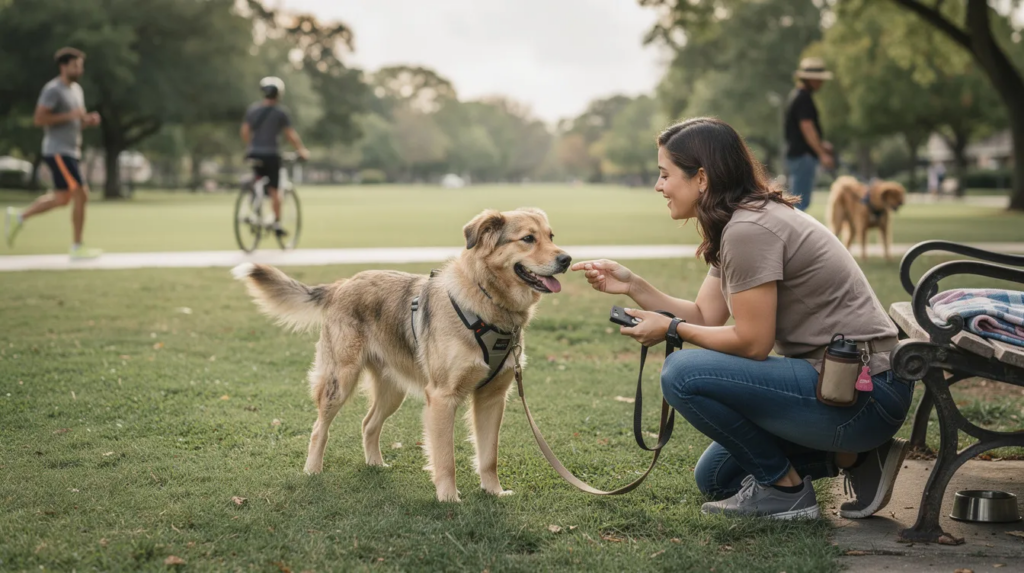
Create safe spaces for decompression at home. Every dog should have access to a quiet room or designated calm space where they can retreat and recover. Use a quiet space for your dog to decompress after stress-this might be a crate with a blanket, a back bedroom, or any area buffered from household activity. The Place command can be an excellent tool for teaching dogs to settle in a designated recovery spot.
Schedule activities to allow recovery time between stressors. If a veterinary visit is planned, avoid scheduling additional stressful events the same day. Provide recovery time after your dog experiences stressors-ideally 24 to 48 hours of low-stimulus activity after significant stress exposure. Effective methods to prevent trigger stacking include allowing recovery time between stressors.
Training Protocols for Trigger Stacking Prevention
Training activities should be below a dog’s threshold for stress to be effective. Continuously exposing dogs to overwhelming situations can be unproductive for behavior modification-and can actively worsen reactivity. The following comparison outlines the primary approaches:
| Method | Best For | Implementation |
| Counter-conditioning | Single trigger sensitivity (e.g., fear of strangers) | Pair the trigger with high-value treats at sufficient distance; gradually build positive associations below threshold |
| Desensitization | Overreactive responses to specific stimuli | Controlled exposure starting at very low intensity; systematically increase magnitude over weeks or months |
| Management protocols | Multiple triggers in complex environments | Environmental control, avoidance strategies, route planning, and scheduling to reduce cumulative exposure |
Counter-conditioning and desensitization work best in combination. For example, when working with a dog reactive to other dogs, you might begin at a distance where the dog notices another dog but can remain calm and accept treats. Over time, you gradually decrease distance while maintaining positive associations. This process can take weeks to months depending on severity.
The key across all methods is threshold management. If your dog can follow cues and take treats, you are working below threshold-this is where learning happens. If your dog cannot ignore the trigger, refuses treats, or shows escalating stress signals, you have pushed too far and need to increase distance or reduce pressure immediately. For dogs with leash reactivity, this threshold-based approach is especially critical.
Identify your dog’s triggers to minimize exposure during outings, and build your training plan around controlled, sub-threshold practice sessions rather than hoping your dog will “get used to it” through raw exposure.
Common Challenges and Solutions
Even well-intentioned dog owners struggle with preventing trigger stacking because real life is unpredictable, stress signals can be subtle, and recovery timelines are longer than most people expect.
Unexpected Trigger Combinations
Dogs may face compound stressors that no one anticipated-a thunderstorm begins during a walk, or a dog park visit coincides with landscaping crews nearby. Create contingency plans for unavoidable multiple exposures: identify escape routes on your regular walks, always carry high-value treats, and practice emergency management techniques (like an “emergency U-turn” or rapid retreat) during calm periods so they become automatic under pressure. Avoid exposing dogs to multiple triggers in quick succession whenever possible, but have a plan for when it happens anyway.
Recognizing Subtle Stacking Signs
Recognizing subtle stress signals is crucial for intervening before a dog reacts. Many early signs-slight body tension, briefly averting gaze, one lip lick-are easy to miss in a busy environment. Keep detailed behavior logs to identify patterns. Note the date, time, location, what happened earlier in the day, and your dog’s behavioral response. Over time, patterns emerge: perhaps your dog is consistently more reactive after car rides, or struggles most during evening walks when the neighborhood is active. Learning your individual dog’s early warning signals is more valuable than memorizing a generic checklist. Cumulative stress can lead to behaviors like barking or lunging that seem to appear without warning-but almost always, the warning signs were present earlier in the stacking sequence.
Recovery Time Underestimation
This is perhaps the most common failure point. Owners assume a dog experiences a stressful situation, rests for an hour, and is back to normal. But stress hormones like cortisol can remain elevated for 24 to 72 hours. Dogs may become more reactive after experiencing trigger stacking precisely because they were not given adequate recovery time. Allow 24 to 48 hours for full stress hormone clearance after a significant stacking event. During recovery periods, provide enrichment activities-food puzzles, chew toys, gentle play-that engage the dog’s mind without elevating arousal. Research on the HPA axis confirms that chronic stress from inadequate recovery can lead to immune suppression, increased anxiety, and heightened aggression over time.
Trigger stacking can overwhelm dogs, making training ineffective. If you attempt a training session while cortisol levels are still elevated from a previous stressful event, you are not training-you are adding another stressor to an already full bucket. Trigger stacking can cause dogs to shut down or become unresponsive, and it can lead to sudden aggressive reactions in dogs. Time your training for periods when your dog has had adequate rest and is starting from a calm baseline.
Conclusion and Next Steps
Trigger stacking is one of the most important concepts in understanding canine reactivity, anxiety, and aggression-and it is entirely manageable with proper knowledge and consistent application of prevention strategies. The core principle is straightforward: each dog experiences stress cumulatively, each stressor adds to the load, and recovery takes far longer than most people assume. By learning to read your dog’s stress signals, managing your dog’s environment thoughtfully, and respecting recovery windows, you can dramatically reduce over-threshold reactions and create conditions where real behavioral progress becomes possible.
Start with these immediate steps:
- Begin a behavior log today. Track your dog’s triggers, stress signals, and the timing of reactive episodes to identify stacking patterns.
- Identify your dog’s top three triggers. Knowing whether the primary challenges are other dogs, loud noises, unfamiliar people, or something else allows you to focus your management efforts.
- Create one dedicated recovery space. Set up a quiet room or calm zone where your dog can decompress after stressful events without additional stimulation.
If your dog’s stress levels and reactivity are not improving with management alone, or if you are seeing aggression, it may be time to work with a professional. For dogs dealing with aggression and reactivity, structured behavior modification programs that integrate threshold assessment, desensitization, counter-conditioning, and owner education are far more effective than trying to manage stacking without expert guidance. Private training sessions can provide the individualized approach that trigger stacking demands, while socialization programs help build the resilience that prevents stacking from becoming a chronic problem.
Additional Resources
- Off Leash K9 Training Toledo’s behavior consultation services – Specialized programs for aggressive and reactive dogs include in-home threshold evaluation, customized desensitization protocols, and owner education on trigger management.
- Stress-reduction tools and environmental modifications – White noise machines, calming music, food puzzles, and designated safe spaces all help reduce baseline stress and support recovery between stressful events.
- Signs that professional intervention is needed – If your dog shows frequent over-threshold reactions, resource guarding, aggression toward unfamiliar people or other dogs, an inability to settle in normal environments, or if stress levels are not improving despite consistent management, seek professional behavior evaluation. In some cases, veterinary behaviorists may recommend anxiolytic medication as an adjunct to behavior modification when chronic elevated cortisol is suspected.