

Introduction
Puppies start teething at around 3 weeks of age when sharp baby teeth begin pushing through the gums, and the entire teething process continues until all 42 permanent adult teeth emerge by 6–7 months of age. Between those milestones, your puppy will lose all 28 baby teeth, experience significant gum discomfort, and go through predictable waves of increased chewing, nipping, and behavioral changes that every pet parent needs to understand.
This guide covers the complete puppy teething timeline-from the pre-teething newborn phase through adult teeth completion-along with the physical signs, behavioral shifts, and management strategies that matter most during each teething stage. It does not cover serious dental diseases or surgical interventions, which require direct veterinary care. The target audience is new puppy owners, particularly those in the Toledo area, who are navigating the challenging months of puppy chewing, puppy biting, and wondering whether their furry friend’s behavior is normal development or something that needs professional training intervention.
Understanding this teething timeline is essential because it helps you distinguish between temporary developmental discomfort and genuine behavioral issues that require a different approach. When you know why your puppy is destroying your shoes at 4 months old, you respond with appropriate redirection rather than frustration-and that distinction shapes your dog’s long-term obedience and trust.
By the end of this article, you will:
- Know the exact ages when baby teeth erupt, fall out, and adult teeth replace them
- Recognize normal teething behaviors versus signs that warrant professional assessment
- Implement effective comfort measures and teething remedies during peak discomfort phases
- Understand when your puppy’s chewing behavior needs training intervention rather than time
- Identify common dental issues like retained baby teeth that require veterinary attention
Understanding the Puppy Teething Process
Puppy teething is the natural developmental process where deciduous teeth (commonly called baby teeth or milk teeth) erupt through the gums, serve their temporary purpose, and are then replaced by permanent adult teeth. This process is biologically governed by complex interactions between tooth bud growth, bone remodeling, and the gradual resorption of baby tooth roots as adult teeth push upward. Much like human babies experience teething discomfort, puppies go through their own version-but on a significantly compressed and more intense schedule.
Puppies are born toothless and rely on mother’s milk during the newborn phase. The biological necessity of developing teeth is straightforward: baby teeth allow early feeding and exploration, while adult teeth are essential for proper nutrition, strong jaw mechanics, correct bite alignment, and lifelong dental health.
Baby Teeth vs Adult Teeth
The distinction between puppy teeth and adult teeth goes beyond just numbers. Baby teeth total 28-they are smaller, thinner, and noticeably sharper than their permanent replacements. That needle-like sharpness is actually a developmental feature: it teaches puppies and their littermates about bite pressure during play, laying the biological groundwork for bite inhibition.
Adult teeth number 42 in total: 12 incisors, 4 canine teeth, 16 premolars, and 10 molars. These permanent teeth are larger, more robust, and designed for the varied diet and jaw demands of an adult dog. Puppies develop 42 adult teeth after losing 28 baby teeth, a transition that reshapes your puppy’s mouth significantly over just a few months.
This sharp-to-strong transition is precisely why early bite inhibition training is so crucial during the 8–16 week period. Those razor-sharp baby teeth make mouthing painful for humans, which creates natural teaching moments to establish soft-mouth habits before the stronger adult teeth arrive.
Physical Changes During Teething
When a puppy is teething, the physical changes inside its mouth are substantial. As adult teeth push through the jawbone and gums, inflammation occurs, resulting in swollen gums, redness, and soreness that can range from mild to quite uncomfortable. Increased drooling often occurs during active tooth eruption as the body’s response to gum irritation.
Swollen or bleeding gums may be observed as teeth loosen and fall out, and slight blood spots on chew toys are normal during active teething phases. Puppy drooling increases noticeably, and you may see your puppy pawing at its mouth or showing reluctance to eat hard kibble.
The critical connection here is behavioral: this physical discomfort directly drives the increased chewing, mouthing, and nipping behaviors that owners frequently mistake for defiance or dominance. Your teething puppy isn’t being “bad”-it’s seeking relief from genuine gum discomfort. Understanding this distinction fundamentally changes how you should respond, which is why knowing the best age to start training matters so much for setting realistic expectations.
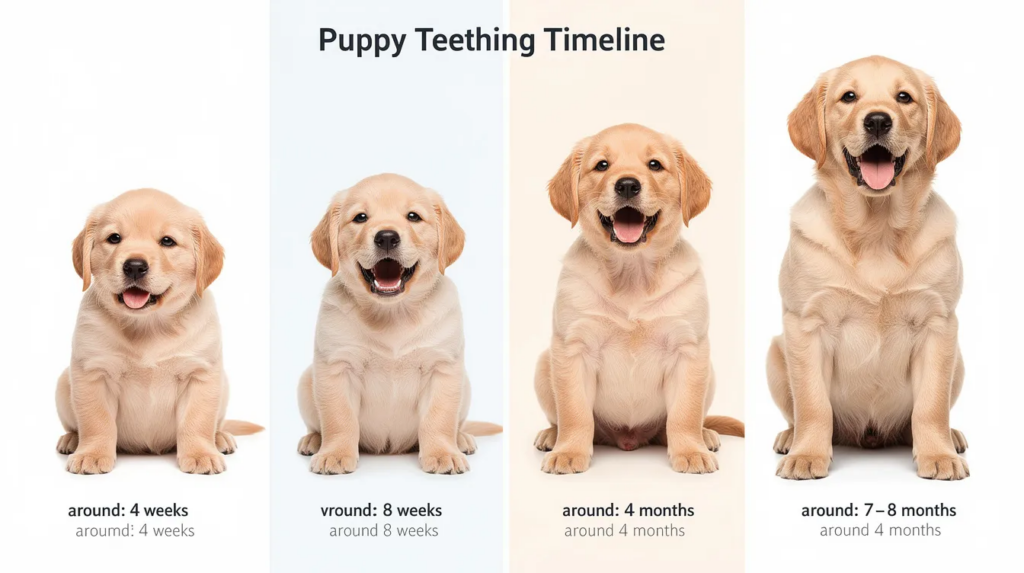
Complete Puppy Teething Timeline by Age
The following teething timeline provides age-specific guidance that most breeds follow, though breed size introduces variation. Large and giant breeds often show earlier adult tooth eruption compared to small breeds, while toy breeds are more prone to delays and retained deciduous teeth. Use this timeline as a planning framework for both dental monitoring and training milestones.
Birth to 3 Weeks: Pre-Teething Stage
Puppies are born completely toothless. During this earliest phase, they rely entirely on nursing and have no chewing behaviors whatsoever. Their gums are smooth, and all dental development is happening beneath the surface as tooth buds form within the jawbone. There are no teething-related behaviors for owners to manage during this stage.
3–6 Weeks: First Baby Teeth Emerge
Sharp baby teeth start pushing through around 3 weeks of age, marking the true beginning of your puppy’s dental development. The process follows a consistent pattern:
- 3–4 weeks: Deciduous incisors appear first-the small front teeth begin breaking through the gumline
- 4–5 weeks: Canine teeth emerge among the baby teeth, giving puppies their first pointed “fangs”
- 5–6 weeks: Baby premolars develop, filling in the sides of the mouth
- 6–8 weeks: Puppies have a full set of 28 sharp baby teeth by 8 weeks of age
During this phase, puppies are still with their litter and mother. The sharpness of these early puppy teeth actually serves an important purpose-when puppies bite each other during play, the pain feedback teaches early bite pressure awareness.
8–12 Weeks: Peak Baby Teeth Period
By 8 weeks of age, all 28 baby teeth are fully erupted and razor-sharp. This coincides with the typical time new puppy owners bring their puppy home, and it’s when natural puppy biting and mouthing behaviors intensify significantly. Puppies explore their world through their mouth, and everything becomes a chewing target.
This period overlaps with the critical socialization window, making it the optimal time to begin bite inhibition training and establish foundation behaviors. Common signs of teething include increased chewing, irritability, and mild loss of appetite-though at this stage, the behaviors are driven more by exploration than by the gum discomfort that comes later.
A puppy training consultation during this window helps set realistic expectations for the more intense teething phases ahead and establishes the training framework that will carry your puppy through adolescence.
12–16 Weeks: Teething Transition Begins
This is where the real teething begins. Puppies start teething at 12–16 weeks of age, as baby incisors start loosening and falling out to make room for emerging adult incisors. By 12 to 16 weeks, baby teeth begin to loosen and fall out for adult teeth to emerge. You may find tiny teeth on the floor, in bedding, or stuck in chew toys-though many puppies swallow their baby teeth, which is completely normal and not a cause for concern.
The signs your puppy is entering this phase include:
- Noticeably increased chewing on both appropriate and inappropriate items
- Puppy drooling more than usual
- Slight bleeding on toys or food bowls from inflamed gums
- Possible reluctance to eat hard food due to gum soreness
The training challenge during this period is distinguishing between teething-driven behavior and attention-seeking patterns. Excessive chewing is a common behavior during teething to relieve gum pressure, but if your puppy is also ignoring previously learned commands, it may be time for a professional assessment rather than simply waiting it out.
16–24 Weeks: Intensive Teething Phase
The heavy teething phase occurs between 4 and 6 months when permanent teeth erupt in rapid succession. During this window, remaining puppy teeth-canines and premolars-fall out and are replaced by their larger adult counterparts. Adult molars also begin emerging during this phase, and since puppies don’t have baby molars, these teeth cut through virgin gum tissue, adding additional discomfort.
Puppies lose baby teeth between 3.5 and 5 months old during the most concentrated period of tooth transition. This is the peak of puppy teething pain, and destructive chewing behaviors reach their highest intensity. Your puppy’s sore gums drive an almost constant urge to chew, and pet owners who haven’t prepared for this phase often face significant damage to household objects, furniture, and personal belongings.
Key management priorities during this teething stage:
- Provide abundant safe chew toys and rotate them to maintain interest
- Implement consistent redirection with “leave it” and “drop it” commands
- Understand that this is the most challenging but temporary teething window
- Maintain training consistency even when your puppy seems to regress
6–7 Months: Teething Completion
All 42 permanent adult teeth typically emerge by 6 to 7 months of age, though some individual puppies and certain breeds may continue the process until 7–8 months. Most puppies finish teething by 6–8 months of age. Once adult teeth are fully in place, gum discomfort subsides, puppy drooling decreases, and the intense chewing drive begins to diminish.
This is a critical evaluation point. If increased chewing, puppy biting, and destructive behaviors persist strongly beyond 7–8 months, the cause is likely behavioral habit, anxiety, or insufficient training rather than teething. This is when puppies stop teething physically, and continued problems warrant a different approach-one focused on obedience training rather than comfort measures.

Managing Teething Behaviors and Training Considerations
The overlap between teething phases and critical training windows means that how you manage teething directly affects your puppy’s long-term behavior. The physical discomfort of teething is temporary, but the habits formed during those months-both good and bad-can persist for years.
Identifying Normal Teething Behaviors
Normal teething behaviors follow predictable patterns that correlate with the timeline above. Common signs of teething include increased chewing, irritability, and mild loss of appetite. Specifically, watch for:
- Increased chewing on both appropriate chew toys and inappropriate household objects-this is the most universal teething sign
- More frequent mouthing and gentle biting during play, especially during the 12–24 week transition
- Loss of appetite that may happen due to sore gums, typically temporary and lasting only a few days at a time
- Mild fussiness or restlessness from gum discomfort, including difficulty settling down
- Puppy drooling more than usual while teething, sometimes accompanied by occasional bloody spots on toys
- Swollen or bleeding gums that can occur during teething as teeth loosen and fall out
The essential training perspective: these behaviors are developmental responses to physical discomfort, not defiance, dominance, or intentional misbehavior. Pet parents who understand this respond with patience and redirection rather than punishment.
Teething vs Behavioral Issues
Distinguishing normal teething from genuine behavioral problems requires attention to context, timing, and pattern:
Normal teething correlates directly with the age timeline, decreases as adult teeth erupt, and responds to comfort measures like cold treats, frozen treats, and appropriate chew toys. The puppy’s chewing behavior targets objects for pressure relief rather than attention.
Behavioral problems persist beyond 7–8 months of age, ignore comfort measures entirely, escalate in intensity over time, and often include other concerning patterns like resource guarding, fear-based responses, or aggression. These issues need structured training intervention, not teething remedies.
Off Leash K9 Training Toledo evaluates whether a puppy’s issues need time, management adjustments, or professional training intervention-a distinction that saves pet owners months of frustration and prevents habits from becoming entrenched.
Training Strategies During Teething
Effective training during the teething phase requires balancing empathy for your puppy’s discomfort with consistency in behavioral expectations:
- Provide structured chew time with a rotation of appropriate chew toys including soft rubber toys, dental chews, and rope toys that satisfy different chewing needs
- Implement consistent redirection from inappropriate items to approved alternatives-every single time, without exception
- Maintain bite inhibition training despite increased mouthing frequency; use a clear “ouch” feedback signal and brief withdrawal of attention when bites are too hard
- Use positive reinforcement when your puppy chooses correct chew items independently, building the habit of seeking approved outlets
- Avoid harsh corrections that increase anxiety during an already stressful developmental period-punishment during teething can create lasting fear or aggression issues
Setting Up for Long-term Training Success
The teething months are actually an ideal foundation-building period if approached correctly. Establish clear household rules about what can and cannot be chewed, and ensure every family member enforces them identically. Create consistent daily structure that reduces anxiety-driven chewing through predictable routines of exercise, training, rest, and supervised free time.
Begin foundation obedience training that builds commands like “leave it,” “drop it,” and reliable recall skills that transfer directly beyond the teething phase into adolescent and adult life. Understanding that teething typically lasts only a few months prevents unrealistic expectations and the inconsistent responses that confuse puppies and undermine training progress.
Common Challenges and Solutions
These are the most frequent teething-related problems that pet owners face, along with practical solutions that address both immediate comfort and long-term behavioral health.
Destructive Chewing of Furniture and Belongings
Puppy-proof your environment before the peak teething phase hits. Keep electrical cords and trash cans out of reach. Remove shoes, children’s toys, and other tempting items from floor level. Provide a variety of chew toys to deter destructive chewing-aim for at least 4–5 options of different textures and types, including soft rubber toys, rope toys, and dental chews.
Supervise closely during the 12–24 week intensive period and redirect immediately to appropriate items. Teach “leave it” before peak teething arrives, so the command is already familiar when your puppy’s chewing drive intensifies. The golden rules of dog training apply especially during these high-stress developmental windows.
Increased Biting and Nipping
Continue bite inhibition training with the understanding that teething increases both the frequency and intensity of mouthing. This is a developmental phase, not a personality flaw. Provide cold chew toys-frozen baby carrots can soothe a teething puppy’s gums naturally, and ice cubes or frozen treats offer numbing relief that reduces the urge to bite hands.
Avoid punishment that can create fear or aggression issues. Instead, use consistent feedback: when biting pressure exceeds acceptable levels, give a clear vocal signal, withdraw attention briefly, then redirect to an appropriate teething toy. The best teething toys combine texture variety with cooling properties to soothe sore gums effectively.
Refusing to Eat Due to Gum Pain
Loss of appetite may happen due to sore gums, particularly during the 16–24 week intensive phase. Soften kibble with warm water or switch temporarily to wet food to reduce chewing pain during meals. Offer cold treats like frozen carrots or specially designed frozen chew toys that provide both nutrition and gum relief.
Monitor your puppy’s weight and energy levels to ensure adequate nutrition during this critical growth period. If appetite loss persists beyond 2–3 days or is accompanied by excessive bleeding, lethargy, or missing teeth that don’t correspond to the normal teething timeline, consult your veterinarian.
Retained Baby Teeth
Puppies may retain baby teeth, requiring veterinary removal if the deciduous teeth don’t fall out as permanent counterparts emerge. Retained deciduous teeth are more common in small breeds popular in the Toledo area, like Yorkshire Terriers, Chihuahuas, and other toy breeds where dental crowding and delayed resorption are more prevalent.
Retained baby teeth can cause malocclusion, increased tartar accumulation, crowding that predisposes to periodontal disease, and can affect bite alignment. If any baby teeth remain alongside their adult replacements past 7–8 months, schedule a veterinary evaluation. Regular dental checkups help monitor puppy dental development throughout the teething process. Introduce brushing with a soft toothbrush during teething to establish dental hygiene habits early, using pet-safe toothpaste designed for dogs. Developing teeth that emerge into proper alignment set the foundation for healthy teeth throughout your dog’s life.
Conclusion and Next Steps
The puppy teething timeline spans from approximately 3 weeks to 6–7 months of age, with the most challenging period concentrated between 12–24 weeks when baby teeth fall out and adult teeth erupt in rapid succession. Understanding this timeline transforms your response to your puppy’s behavior-what looks like defiance is almost always developmental discomfort, and what feels permanent is almost always temporary.
The key distinction every pet parent needs to make: teething behaviors diminish naturally as adult teeth complete their emergence, while behavioral issues persist and escalate. Knowing where your puppy falls on this timeline tells you whether patience or professional intervention is the right response.
Immediate Action Steps
- Assess your puppy’s current age and teething stage using the timeline above to understand what physical and behavioral changes to expect next
- Puppy-proof your home and stock a variety of appropriate chew toys-including soft rubber toys, rope toys, and items that can be frozen-before the peak teething phase hits
- Avoid hard bones or antlers that can damage developing teeth; choose puppy-safe chew toys designed for the teething stage
- Schedule a puppy training consultation to establish training foundations during the optimal 8–16 week window
- Begin regular mouth checks and introduce teeth brushing with a soft toothbrush and pet-safe toothpaste to build lifelong dental hygiene habits
- Monitor your puppy’s dental development and note any retained baby teeth for veterinary discussion at the 6–7 month mark
Related Training Topics
- Bite inhibition training: Critical during teething months when sharp puppy teeth and increased mouthing create the highest learning opportunity for soft-mouth skills-learn more about puppy training approaches
- Basic obedience foundation: Establishing reliable commands like “leave it” and “drop it” before the adolescent testing phase makes teething management significantly easier
- Puppy socialization: The critical socialization window overlaps directly with early teething, meaning both processes benefit from structured, positive experiences during the same developmental period
- Training treats: Selecting appropriate rewards that accommodate a teething puppy’s sore gums ensures training remains positive and effective throughout the teething phase