

Introduction
Puppy crying at night is one of the most common challenges new puppy owners face, and it’s almost always a normal adjustment behavior. When a young pup is separated from their mother and littermates and placed in a new environment, nighttime whining and crying is their natural way of communicating distress, discomfort, or simple loneliness. The good news: with the right approach, most puppy owners can dramatically reduce crying and help their furry friend settle into peaceful sleep within a matter of days.
This guide covers everything you need to know about why your new puppy cries at night and what to do about it. We’ll walk through the specific causes behind nighttime crying, proven crate training protocols, effective bedtime routines, realistic timeline expectations, and clear guidance on when professional training help is the smartest move. Whether you’re a first-time pet parent in Toledo or an experienced dog owner bringing home a new pup, this resource is built to get you and your puppy sleeping through the night as quickly as possible.
Most puppies cry for 3–10 days at night during their initial adjustment period. With consistent training techniques-especially structured crate training and a good bedtime routine-crying duration and intensity typically decrease significantly within the first two weeks.
By the end of this guide, you’ll be able to:
- Distinguish between normal adjustment crying and signs of a deeper behavioral or medical issue
- Implement a professional-grade crate training protocol that builds your puppy’s confidence
- Establish a consistent bedtime routine that helps your puppy settle faster each night
- Troubleshoot common obstacles like potty training complications and crate resistance
- Recognize when it’s time to seek professional training support
Understanding Puppy Nighttime Crying
Nighttime crying in puppies is a natural communication method. Whining, howling, and barking during sleeping hours serve as signals-your puppy may be expressing discomfort, fear, hunger, the need for a potty break, or emotional distress from being alone. Understanding the difference between normal adjustment crying and problematic behavior is the first step toward helping your pup (and yourself) get a good night’s sleep.
Puppies aged 8–16 weeks are in a critical developmental window where their brains are highly plastic. During this period, socialization, bonding, routine, and exposure to new surroundings shape long-term behavior. Sleep patterns are still immature, and fear periods (often around 8–12 weeks) can make young puppies more sensitive to unfamiliar or isolated settings. This developmental context is essential for understanding why your crying puppy behaves the way they do-and why your response matters so much.
Normal Adjustment Crying
Normal adjustment crying is temporary and predictable. It typically occurs immediately after bringing home a new puppy and is most intense during the first few nights. Crying tends to be intermittent-short bursts of whining that taper in intensity and duration over the first few days. By days 3–10, most puppy owners notice meaningful improvement, and a puppy’s adjustment phase usually lasts up to two weeks before nighttime crying resolves or becomes minimal.
Key characteristics of normal adjustment crying include: episodes that start shortly after lights-out or when the puppy is placed in their crate; whining that partially responds to reassurance such as your calm voice or brief physical comfort; and a general trend of decreasing intensity night after night. During this period, your puppy is learning to self-soothe and adapt to life without the constant warmth of littermates. Young puppies also have limited bladder capacity-puppies can hold their bladder about one hour per month of age-so occasional waking for a potty break is normal, not a sign of a problem.
Problematic Crying Behaviors
Not all crying falls within the normal range. Signs that your puppy’s nighttime distress has moved beyond typical adjustment include: crying that escalates in intensity over successive nights rather than calming down; episodes lasting hours every night after two or more weeks; panic behaviors such as pacing, destructiveness, attempts to escape the crate, or self-injury; and refusal to settle even when comfort and routine are consistently applied.
These behaviors may signal developing separation anxiety, chronic fear, an underlying medical issue, or a significant mismatch in the puppy’s sleeping environment. A little whining is normal for new puppies; continuous crying may require attention. The critical distinction is that adjustment crying is predictable and diminishes with routine, while problematic crying often leaks into daytime behavior and responds poorly to standard comfort strategies. Separation anxiety can cause prolonged crying in puppies and warrants a different, more structured intervention approach.
Understanding these causes in detail is the next step toward finding the right solution for your specific situation.
Common Causes of Nighttime Crying
Now that you can distinguish normal adjustment from concerning behavior, let’s examine the specific reasons behind your puppy crying at night. Most nighttime crying stems from one or more of these three categories: emotional distress, physical needs, or environmental and training gaps.
Separation Anxiety and Loneliness
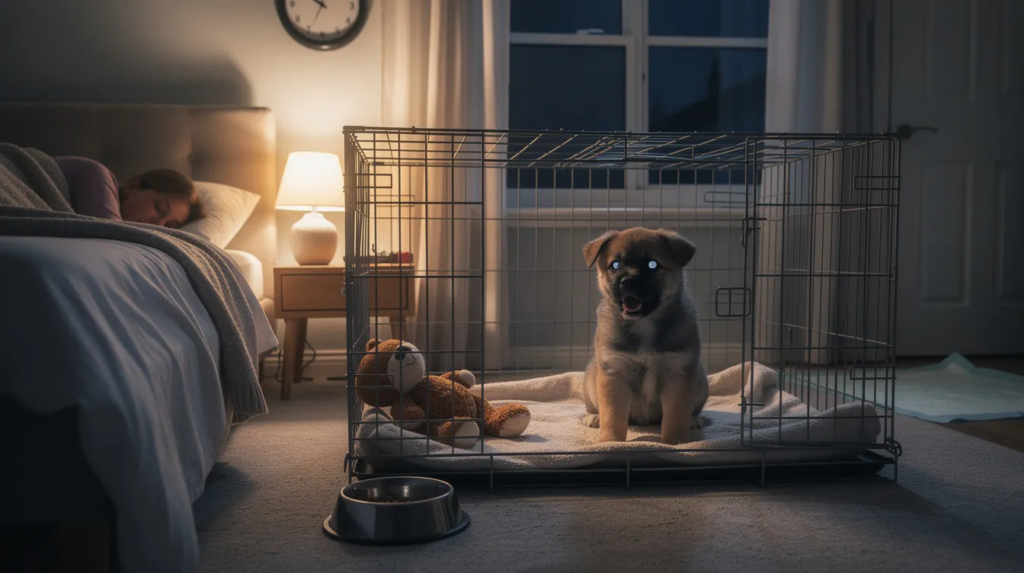
Puppies cry at night due to loneliness and fear after separation from their litter. Before coming to your house, your young pup spent every moment surrounded by warm bodies, constant feeding, and the reassurance of their mother. Being placed alone in a crate or a different room represents a dramatic shift. Your puppy is feeling lonely, and their crying is a call for the companionship they’ve known since birth.
This emotional distress is amplified during the fear periods common in 8–12-week-old puppies, when unfamiliar stimuli can provoke heightened anxiety. Without gradual habituation to being alone, some puppies overgeneralize separation as a genuine threat. Research published in Applied Animal Behavior Science (Blackwell et al., 2025) found that structured habituation-gradually increasing the time a puppy spends alone-combined with calm departure and reunion protocols can measurably reduce passive anxious behaviors like panting, lip licking, and trembling. Boredom can also lead to nighttime crying in puppies, particularly if a young pup hasn’t had sufficient mental and physical stimulation during the day. Exercise during the day helps puppies sleep better at night.
Physical Needs and Discomfort
Puppies may cry because of biological discomfort such as hunger or temperature. Physical causes of nighttime crying are sometimes the simplest to address but easy to overlook:
- Bladder capacity: Puppies can hold their bladder one hour per month of age. An 8-week-old puppy (2 months) can manage roughly 2 hours, meaning puppies may need multiple potty breaks during the night. Puppies may need a middle-of-the-night potty break until about 4 to 5 months old.
- Hunger and thirst: If dinner is too early or water access is mismanaged, your pup may wake from hunger or thirst. The guideline is to limit water intake two hours before bedtime to reduce overnight disruption while keeping your puppy comfortable.
- Temperature: Young puppies are poor regulators of body temperature. Sleeping quarters that are too cold, drafty, or excessively warm cause discomfort that leads to crying.
- Health concerns: Teething pain, gastrointestinal distress, parasites, illness, or injury can all trigger unusual crying. If your puppy’s sounds change in quality or intensity, or are accompanied by lethargy or appetite loss, consult your veterinarian to rule out a medical issue.
Environmental and Training Factors
The physical setup and training approach you use have a direct impact on how quickly your puppy settles at night. Proper crate sizing is critical-a crate that’s too large allows a puppy to eliminate in one corner and sleep in another, reducing comfort and complicating toilet training. A crate that’s too small restricts movement and causes pressure. The crate should be just large enough for your puppy to stand, turn around, and lie down comfortably; use a divider panel to adjust size as your pup grows, moving to a larger crate only when needed.
Soft bedding, a familiar smell (such as a blanket from the breeder or a worn T-shirt with your scent), and a safe space that feels den-like all contribute to a puppy feeling secure. On the training side, lack of a consistent bedtime schedule, erratic feeding and play times, and inconsistent responses to crying are among the most common reasons puppies struggle to settle. Puppies that have been introduced to crates gradually-with positive association through treats and meals before their first night home-adapt far more quickly than those dropped into full confinement without preparation.
With a clear understanding of these causes, you can now apply targeted solutions that address each factor directly.
Effective Solutions and Training Methods
Addressing puppy crying at night requires a combination of proper crate training, a structured bedtime routine, and smart sleep arrangement decisions. At Off Leash K9 Training Toledo, we use proven methods designed to achieve rapid, lasting results-these same principles form the foundation of the protocols below.
Professional Crate Training Protocol
Crates provide a safe, den-like space for puppies, and structured crate training is the single most effective tool for reducing nighttime crying. Crate training can take one week to one month depending on your puppy’s temperament and prior experience, but most pet parents see significant improvement within the first few days when following a stepwise approach:
- Proper crate sizing and setup: Choose a crate just large enough for your puppy to stand, turn, and lie comfortably. Add soft bedding and a familiar-smelling item. Covering the crate can help calm a crying puppy by creating a cozy, den-like atmosphere.
- Positive association building: Before using the crate at night, spend time during the day feeding your puppy their meals inside the crate with the door open. Scatter treats inside. Use positive reinforcement-praise and reward good behavior every time your pup enters voluntarily. A ticking clock or warm water bottle can help comfort puppies in their crate by mimicking the warmth and heartbeat of littermates.
- Gradual duration increases: Close the crate door for short periods while you remain visible. Slowly extend the time, always rewarding calm behavior. Avoid opening the door while your puppy is actively crying-puppies should not be let out of the crate while crying, as this teaches them that vocalization earns release.
- Nighttime implementation: Place the crate near your own bed initially so your puppy can hear and smell you. Placing the puppy’s crate next to your bed can ease their anxiety. Take your puppy out for a pre-bedtime potty break (a pre-bedtime potty break is essential for puppies), then calmly place them inside with a quiet cue. Avoid exciting play or emotional goodbyes.
Following UC Davis crate training guidelines, avoid punishing whining but also avoid rewarding it with immediate attention. The goal is for your puppy to learn the crate is a safe space, not a place of isolation.
Bedtime Routine Comparison
A consistent bedtime routine helps puppies feel secure and signals that it’s time to sleep. The contrast between effective and ineffective approaches is striking:
| Criterion | Effective Routine | Ineffective Routine |
| Timing consistency | Same bedtime every night | Irregular or shifting schedule |
| Pre-sleep activity | Calm walk, gentle play, then quiet winding down 30 min before bed | Exciting play or stimulating activity right before lights out |
| Attention management | Brief reassurance if needed; wait for quiet before responding | Picking puppy up every time they cry; bringing puppy to your own bed |
| Environmental controls | Dim lights, quiet room, consistent temperature | TV noise, bright lights, changing sleeping quarters |
| Sleep location | Same crate/room every night | Frequently changing arrangements or rooms |
| Potty management | Final potty break right before bed; keeping nighttime potty trips quiet and boring helps minimize excitement | No pre-bed potty break; excited middle-of-night interactions |
A good bedtime routine helps your puppy learn what to expect each night. When your puppy settles into a pattern, their brain associates the sequence of events-final walk, calm play, last potty break, crate-with sleep. New pet parents who commit to this structure during the first few weeks consistently report faster results.
Sleep Arrangement Strategies
Where your puppy sleeps matters as much as how you manage the routine. During the first few nights, placing the crate in your bedroom lets your puppy sense your presence, reducing the feeling of being abandoned. Over 2–3 weeks, gradually move the crate toward your puppy’s permanent sleeping quarters-whether that’s a different room, a hallway, or a designated area of the house.
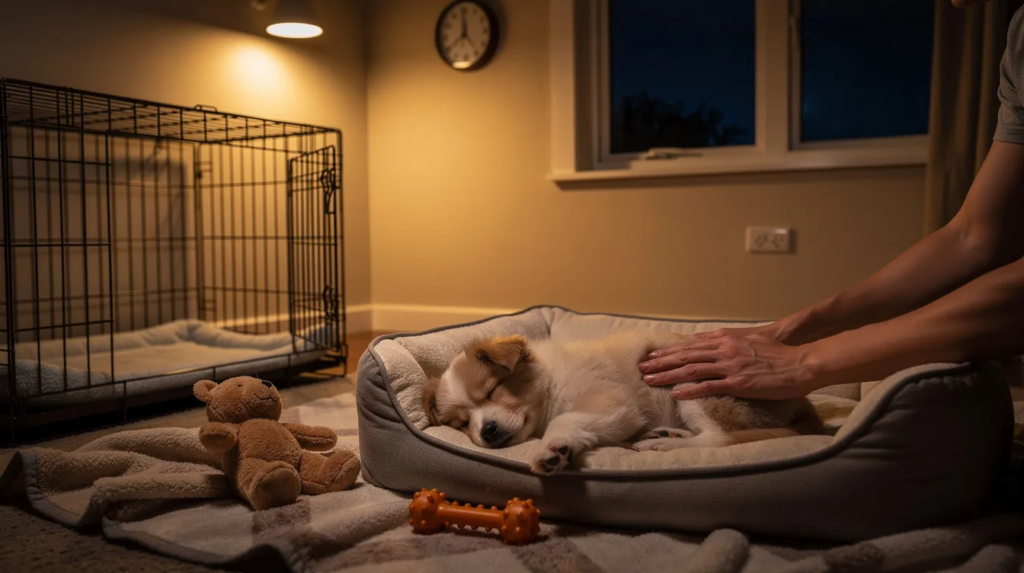
Comfort items make a significant difference: a blanket with a familiar smell from the breeder, a puppy-safe stuffed toy, or a worn T-shirt with your scent can all help a young pup settle. White noise machines or soft classical music reduce startle reactions from household sounds. Ensure the dog bed or crate bedding supports joints and provides warmth without overheating. Avoid placing loose items that could be chewed and swallowed.
The long-term goal is independent sleeping-your puppy resting comfortably through the night without needing your immediate presence. Achieving this through gradual steps rather than abrupt changes prevents regression and builds lasting confidence.
Common Challenges and Solutions
Even with a solid plan, obstacles arise. Here are the most common issues pet parents encounter and how to address them with professional training insights.
Persistent Crying Beyond Two Weeks
If your puppy’s crying hasn’t diminished after two weeks of consistent training, it’s time to reassess. First, schedule a veterinary check to rule out any medical issue-pain, illness, or digestive problems can sustain nighttime distress. Next, evaluate your own consistency: mixed signals (sometimes comforting, sometimes ignoring) prolong the problem significantly.
For puppies showing signs of genuine separation anxiety, a more structured behavior modification protocol is warranted. This involves desensitization and counter-conditioning-practicing brief separations during the day, gradually increasing duration, and pairing each departure with calm, positive cues. A puppy training consultation with a professional trainer can help identify exactly where the process is breaking down and provide a custom plan.
Crate Training Resistance
Some puppies show genuine fear or panic in crates-frantic escape attempts, excessive drooling, or intense vocalization that doesn’t diminish. In these cases, back up the training: leave the crate door open permanently for several days, feeding all meals inside without closing it. Spending time near the crate while your puppy explores it builds trust.
If resistance remains severe, consider a puppy pen as an intermediate step-a larger, more open confinement area that provides boundaries without the enclosed feel of a crate. Intensify positive reinforcement: high-value treats, praise, and engaging toys when your puppy voluntarily enters. Never force your pup inside or use the crate as punishment. The crate should always remain a safe space.
Nighttime Potty Training Complications
Frequent overnight accidents are expected with young puppies. Puppies can hold their bladder one hour per month of age, so a 3-month-old puppy may need to go out every few hours during the night. Plan for one scheduled wake-up for potty breaks with very young puppies rather than waiting for crying to signal the need.
Keep nighttime potty break trips quiet and boring-no play, no excited praise, just a calm trip outside and back to the crate. Avoid using puppy pads inside the crate, as this encourages elimination in the sleeping area. Clean any accidents with enzymatic cleaners to fully remove the smell. As your puppy grows and bladder capacity increases, these overnight interruptions naturally phase out. Most puppies reliably hold through the night by 4–5 months old when potty training is consistent.
Conclusion and Next Steps
Puppy crying at night is a temporary challenge, not a permanent life sentence. Most puppies cry for 3–10 days during adjustment, and with consistent crate training, a structured bedtime routine, and patience during the first few weeks, the vast majority of puppy owners see significant improvement within one to two weeks. The key is understanding that your new puppy’s crying is normal communication-not defiance-and responding with calm, consistent training rather than frustration.
Your immediate action steps:
- Set up your crate properly with the right size, soft bedding, and comfort items like a familiar-scent blanket or warm water bottle
- Establish a good bedtime routine tonight: final meal, calm play, last potty break, quiet crate time
- Place the crate near your bed for the first few nights, then gradually move it to the permanent location
- Track progress for the first week: note crying duration, frequency, and what triggers or calms your pup
- Stay consistent-avoid changing your approach night to night, and don’t reward crying with attention
If your puppy’s crying persists beyond two weeks, escalates in intensity, or is accompanied by panic behaviors, professional help is the fastest path to resolution. Off Leash K9 Training Toledo offers puppy consultation services that include personalized assessment of your puppy’s temperament and environment, custom crate training plans, and real-time coaching. For owners who need overnight support, our board and train program provides immersive training in a structured setting.
Once your puppy is sleeping through the night, the foundation is set for broader training success. Explore related topics like starting training at the right age, teaching foundational commands like the place command, and building distraction-proof obedience that lasts a lifetime.
Additional Resources
- Professional puppy consultations: Off Leash K9 Training Toledo offers personalized training plans for new puppy owners dealing with nighttime crying, separation anxiety, and foundational obedience
- Recommended comfort items: Heartbeat-simulating stuffed toys, warm water bottles, white noise machines, and enzymatic cleaners for accident cleanup are puppy-safe essentials for the first few weeks
- Crate selection guidance: Cornell University’s crate sizing and selection guide provides detailed recommendations for choosing the right crate as your pup grows
- Health concerns: If crying is accompanied by lethargy, appetite loss, vomiting, or unusual behavior, contact your veterinarian promptly to rule out underlying medical issues